
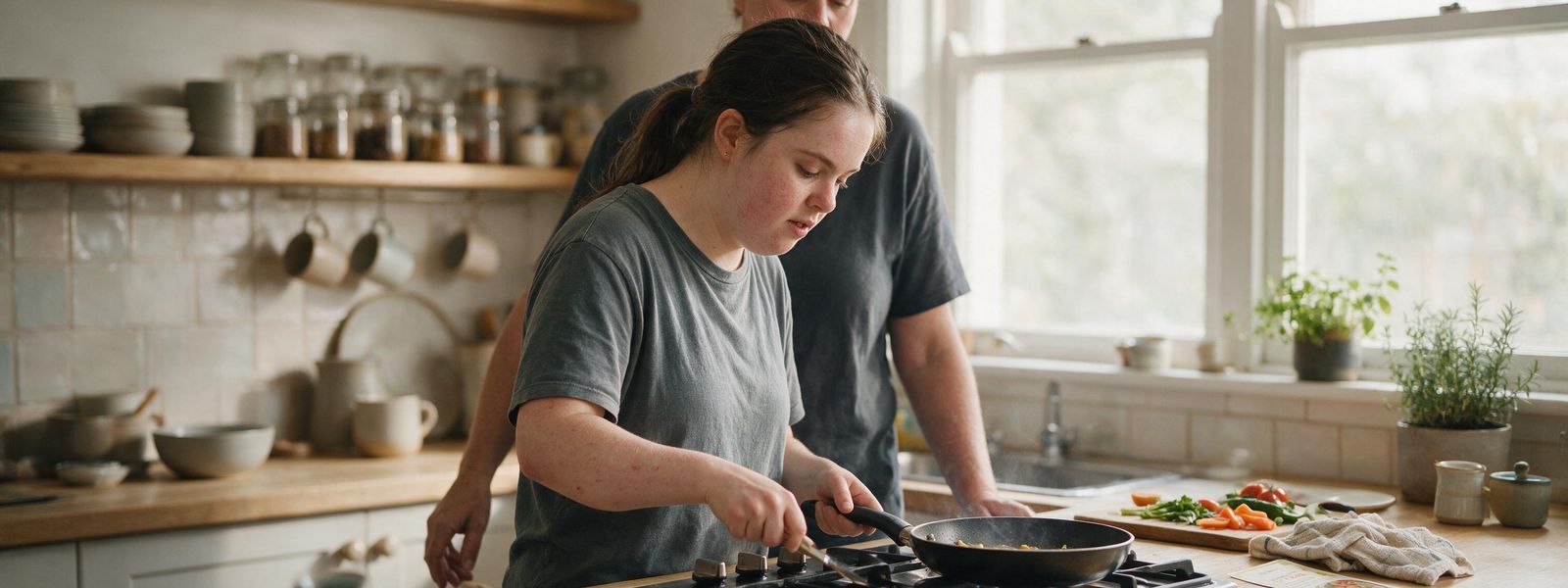
Development of Daily Living and Life Skills
Developing daily living and life skills in Adelaide
Funding designed to work itself out of a job.
Development of Daily Living and Life Skills is National Disability Insurance Scheme (NDIS) funding for learning to do things yourself — cooking a meal, managing a budget, catching the bus, staying on top of appointments and paperwork. Complete Choice provides it across Adelaide, within 100km of the CBD.
It sits in Capacity Building, not Core Supports, because the goal is different. Household Tasks pays for someone to do the job. Life skills pays for someone to teach you — and then to step back.
What do we work on?
We work on the everyday skills you choose: cooking and meal planning, budgeting, shopping, catching public transport, handling appointments and paperwork, staying safe online, household routines, and social skills. You set the goal, and we build towards it in the place you’ll use it. These are starting points, not limits.
Cooking and meal planning · budgeting and money · shopping and comparing prices · public transport, confidently · appointments, forms and personal admin · phone, email and online safety · household routines · social and communication skills.
How does it work?
It starts with what you want to be able to do, in your words — “cook three meals I actually like” beats “improve independence”. Then we practise in the real place: your kitchen, your money, the bus route you’d really catch. Support steps back as you build the skill, and it ends when you don’t need it.
We build up — with you, beside you, nearby, then not at all. We write down what changes — visible progress for you, evidence for your next plan reassessment. And we say when you don’t need us. The point of this support is that it ends.
Life skills inside SIL
In a Complete Choice Supported Independent Living (SIL) home, skill building is part of the day, not a separate appointment — cooking one night a week, then two; your own medication with prompting instead of administration. Supported Independent Living
What changed on 1 October 2026?
From 1 October 2026, budgets for improved daily living skills supports are reduced by 10%. The change is applied when your plan is created or reassessed, or renewed from 1 February 2027, and it can’t be reviewed. Some supports in this category aren’t affected, including disability-related health supports and high intensity supports.
You can keep using your current plan until then, and the National Disability Insurance Agency (NDIA) will tell you before your plan is reassessed or renewed. Our guide to the NDIS changes of September and October 2026 explains it in full, with the official sources.
How does it start?
It starts with a phone call to our office. You tell us what you need, or what you're not sure about. Then we look at your plan and funding, meet you, and agree in writing what your support looks like. Support begins after that, with review dates built in so it keeps fitting your life.
Call us.
08 7009 4462. Tell us what you need — or what you're not sure about. Working that out is a normal first conversation.
Plan it together.
We look at your plan and your funding, meet you, and agree what support looks like — in writing, before anything starts.
Support begins.
With review dates built in, so it keeps fitting as your life changes.
Questions people ask
What are daily living and life skills supports?
They're NDIS supports that teach you to do everyday things yourself, rather than having them done for you. The NDIS describes them as training to build your ability in areas like shopping, meal preparation, managing money, your own personal care, travel and public transport, and social skills. Complete Choice provides them across Adelaide, within 100km of the CBD.
Which funding pays for daily living and life skills support?
Capacity Building pays for it, through the support category Improved daily living. Capacity Building funding is stated, which means you can't move it between categories the way you can with Core Supports. From 1 October 2026, budgets for improved daily living skills are reduced by 10% when your plan is created or reassessed, or renewed from 1 February 2027.
How is life skills support different from household tasks?
Household Tasks pays for someone to do a job for you, from Core Supports. Life skills support pays for someone to teach you to do it yourself, then step back, from Capacity Building. Many people have both: a worker does the heavy cleaning while you learn to cook, shop or manage your own laundry. Your plan shows which you've been funded for.
Where does it happen?
Wherever you'll actually use the skill. That might be your own kitchen, your bank, the supermarket you shop at, or the bus route you'd really catch. Learning in the real place means the skill holds when your worker isn't there. If you live in a Complete Choice Supported Independent Living home, it happens as part of your day there.
How long does it run?
As long as you're building the skill, and no longer. Life skills support is designed to reduce over time: with you, then beside you, then nearby, then not at all. We write down what changes, so you can see your progress and have evidence for your next plan reassessment. When you no longer need us for a skill, we'll say so.
Can I build life skills while living in SIL?
Yes, and it's often where it works well. In a Complete Choice Supported Independent Living (SIL) home, skill building is part of your day, not a separate appointment. You might cook one night a week, then two, or move from having your medication administered to taking it yourself with prompting. SIL support workers are there 24/7 while you learn.
What does "improved daily living" mean in my NDIS plan?
Improved daily living is a Capacity Building support category in your NDIS plan. It pays for supports that build your living skills and increase your independence and involvement in your community, such as assessments, training or therapies. The funding is stated, so you must spend it on the supports described in that category. Life skills training can be funded from it.
Talk to someone who can actually answer.
Call 08 7009 4462 and you'll reach a person who knows what's available today — not a call centre reading a screen.
08 7009 4462Mobile 0424 000 751