
Guide
Short term respite in 2026: who can get it, how many days, and what it covers
By Complete Choice · Last reviewed 2 October 2026
Short term respite (formerly Short Term Accommodation, or STA) is National Disability Insurance Scheme (NDIS) funding for time apart from your usual care arrangements, so the people who support you can take a break. It's usually funded for up to 28 days a year, and it pays for your supports and standard accommodation, not food.
What is short term respite?
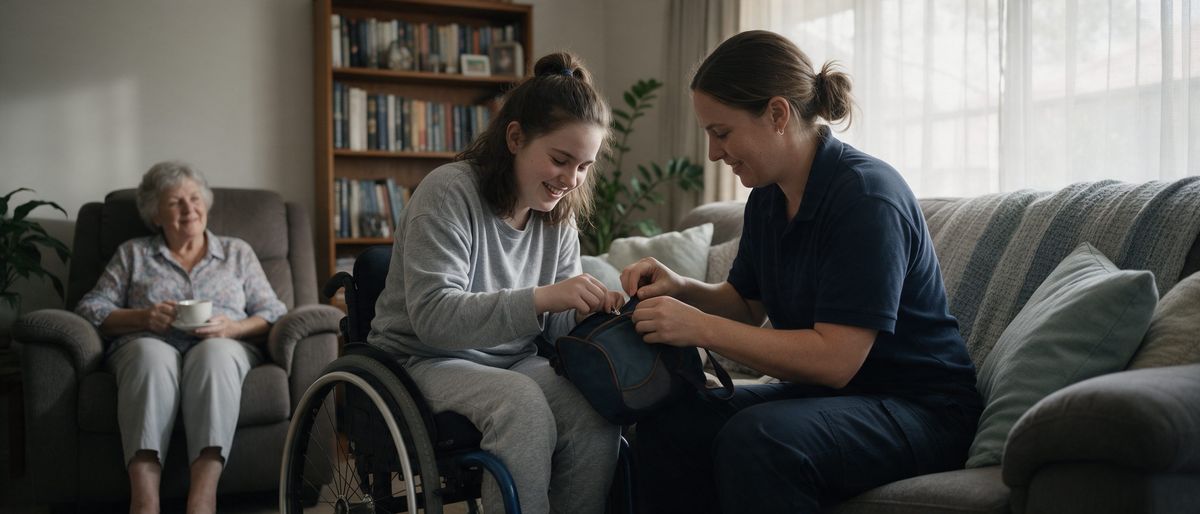
Short term respite is a National Disability Insurance Scheme (NDIS) support that gives you time apart from your usual care arrangements, like your family, friends or carers. It also gives the people who usually help you a short break, which the NDIS says helps them keep caring for you afterwards. It used to be called Short Term Accommodation (STA).
The NDIS changed the name on 20 October 2025. Its reason was that the new name better reflects the purpose of the support. The NDIS also says the focus is now the support you get, whether at home or in a shared setting, rather than the building.
You will still see the older name. The NDIS participant page still uses it in places, and so do some providers. It is the same support.
Who can get short term respite?
The NDIS says you may be able to get short term respite if you live with family, friends or a carer, or get daily drop-in support, and they give you more than six hours of disability-related support a day. That is the NDIS’s own wording, not a guarantee. Whether it goes in your plan isn’t something a provider decides.
In the NDIS’s words, you may be able to get it if you:
- live with your primary informal supports, like family, friends or a carer, or get daily drop-in support, and
- get disability-related support from those primary informal supports for more than six hours a day.
If you think you need it, the NDIS says to talk to your NDIS contact.
The NDIS also says there may be other options. That could be a support worker to help you at home, or community and mainstream supports.
What about children and young people?
The NDIS may fund short term respite for someone under 18 in some situations. Both of these need to be true:
- Their disability-related support needs are more than what is typical for their age.
- The respite helps their family keep caring for them, for example a break to look after their own wellbeing or health.
It doesn’t replace normal parenting. The NDIS gives examples: helping your child to go to the toilet, settling them to sleep at night, or babysitting.
How many days of short term respite can you use?
Short term respite is usually funded for up to 28 days a year. You can use it flexibly. The NDIS gives two examples: a block of up to 14 days at a time, or one weekend a month. Whatever pattern you choose, the funding has to last for the whole length of your plan.
That’s the catch. You have to spend it in line with your plan. If you use it for more support than you need, you may run out before the plan ends.
If your plan doesn’t have the respite you need, or your situation has changed, you can ask to change your plan.
What does short term respite cover?
Short term respite pays for your supports and standard accommodation while you’re apart from your usual care. The NDIS says that includes everyday support like showering, cooking and toileting, a stay somewhere like a motel, cabin or respite accommodation, or support to stay in your own home if you usually need overnight support.
The NDIS says you can use it for:
- Everyday support, like showering, cooking and toileting.
- Standard accommodation, like a hotel, motel, short stay rental, cabin, cottage, hostel or respite accommodation.
- Support to stay in your own home, or a homestay arrangement with a support worker, if you usually need overnight support.
You choose the setting. It can be your own home, a shared setting or an individual setting.
You should generally use it in your home state or territory. The NDIS may fund it elsewhere if you live in a remote area.
The line items for claiming it are in the NDIS pricing schedule. The NDIS says you should only pay for the supports you actually use.
What doesn’t short term respite cover?
Short term respite doesn’t pay for food, holidays or entertainment. The NDIS says you can’t use this funding for items on its list of non-NDIS supports. That includes meals, holiday packages and airfares, travel costs for family or support workers who come with you on holiday, and theme parks, music, theatre or the cinema.
The NDIS’s examples include:
- Food or meals.
- Cruises, holiday packages, holiday accommodation and airfares.
- Passports, visas, and travel or vehicle insurance.
- Accommodation or travel expenses for family members or support workers who support you on holiday.
- Theme parks, music, theatre, cinema, sporting events and conferences.
It also doesn’t replace normal time apart, like going to school, going to work or doing activities in the community. And it doesn’t replace other community supports, like crisis accommodation.
How does short term respite differ from SIL and MTA?
Short term respite is only about a break from your usual care arrangements. Supported Independent Living (SIL) is ongoing support where you live. Medium Term Accommodation (MTA) is somewhere to live for up to 90 days while your long-term home isn’t ready, or after a hospital stay. Each has its own rules.
Short term respite isn’t a way to find a home. Our guide SIL, MTA or STA: which one do you need? puts the three side by side. Every term is explained in our NDIS glossary.
If you want to talk to us
Complete Choice is a registered NDIS provider and a for-profit company. We provide Short Term Accommodation and respite across Adelaide, within 100km of the CBD.
We can’t tell you whether respite is in your plan or how many days you will get. We can tell you how a stay works and what to ask. To ask about dates, call us on 08 7009 4462.
This is general information, not advice about your plan. Your Support Coordinator or the NDIS can tell you what applies to you.